Welcome!

Thanks for visiting my blog! I hope it will serve to inspire you and perhaps inform you in some small way regarding the Holy Orthodox Faith or our Lord Jesus Christ. Feel free to comment or ask questions. Christ be with you!

Showing posts with label prayer. Show all posts

Friday, January 20, 2012

Saint Fabian, Pope, & Saint Sebastian, Martyrs, January 20th


Saint Fabian, Pope, & Saint Sebastian, Martyrs,

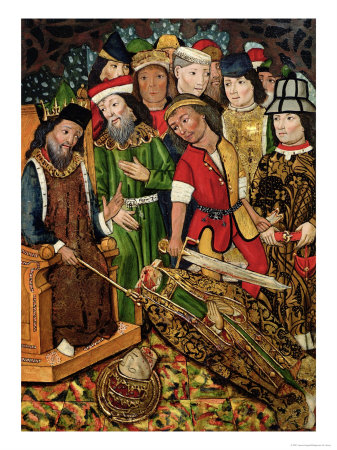
Martyrdom of St. Fabian, Pope

Fabian was a Roman, and sat as Pope from the year 236, in the reign of the Emperor Maximin, till 250, in that of Decius. He is said to have appointed a deacon to each of the seven districts of Rome to look after the poor, and the same number of subdeacons to collect the Acts of the Martyrs from the records kept by the seven district notaries ; and to have ordained that every Maundy Thursday the old chrism should be burnt and the new consecrated. He was crowned with martyrdom on the 20th of January, in the year 250, during the persecution of Decius, and buried in the cemetery of Saint Callistus on the Appian Way, having sat in the throne of Peter fifteen years and four days. By the Pontifical Book he is said to have held five Advent ordinations, in which he ordained twenty-two p0riests, seven deacons and eleven bishops for divers Sees. * The holy Martyr Sebastian was once a great favourite of the Emperor Diocletian, both on account of his noble birth and his personal bravery, and was Captain of the First Company of the Praetorian Guards, albeit he was in secret a Christian, and often assisted other Christians by his good offices and by Alms. When these things became known, Diocletian sent for Sebastian and, after violently rebuking him, used every means to turn him from his faith in Christ. But as neither promises nor threats availed, he ordered him to be tied to a post and shot to death with arrows. * Sebastian was treated accordingly and left for dead. But when in the night a holy widow Irene went to bury him, he was found still alive. And Irene nursed him in her own house till his health was restored. Then went he, and rebuked Diocletian for his wickedness. Which same ordered him to be beaten to death with rods, under which torments the Martyr yielded his blessed soul to God, on January 20th, 288. His body was thrown into a sewer, but was later found and buried in those Catacombs over which a famous Church hath since been built, called Sebastian’s-without-the-Walls.
St.Sebastian

Collect:
Protect us, O Lord, we beseech thee: who observe the feast of blessed Fabian and Sebastian, thy holy Martyrs, and grant that by their meritorious supplication we may ever find favour in thy sight, through Jesus Christ our Lord. Amen.

Thursday, January 19, 2012

Saints Maris, Martha, Audifax, and Habakkuk, Martyrs

Saints Maris, Martha, Audifax, and Habakkuk, Martyrs, January 19


Maris was a Persian of high rank, who came to Rome in the reign of the Emperor Claudius, with his wife Martha, who was equally noble, and their two sons Audifax and Habakkuk, to pray at the graves of the martyrs. Here they comforted the Christians who were in prison, (whom they relieved by their ministrations and alms,) and buried the bodies of the Saints. For these good deeds they were all arrested, but no threats or terrors could move them to sacrifice to idols. They were accordingly beaten with clubs, dragged about with ropes, burnt with red-hot metal, and mangled with metal hooks. Lastly their hands were all cut off, and they were fastened together by the neck, in which state they were driven through the City to the Thirteenth Milestone on the Cornelian Way, a place now called Santa Ninfa, where they were to die. There Martha addressed a moving exhortation to her husband and sons to hold out bravely to the last, for the love of Jesus Christ, and was then herself drowned. The other three martyrs were next beheaded, and thrown into a fire. The lady Felicity of Rome collected the half burnt remains, and caused them to be buried at her won farm. The date of their death was in the year 270.


Collect:
O Lord, we pray thee, graciously to hear thy people that call upon thee with the assistance of thy Saints, that we may obtain of thee peace in this our temporal life, and likewise thy succour unto life eternal, through Jesus Christ thy Son, our Lord, who liveth and reigneth with thee and the Holy Ghost, ever one God, world without end. Amen.

Wednesday, January 18, 2012

Saint Prisca, Virgin and Martyr, January 18


St. Prisca, Virgin & Martyr
Saint Prisca, Virgin and Martyr, January 18

This Saint Prisca hath been venerated in Rome from the very earliest times as a Virgin and Martyr. She was a maiden of noble lineage who, at the age of thirteen, was accused before the Emperor Claudius, but remained faithful to Christ in spite of the most barbarous tortures inflicted on her pure body. And that finally she was beheaded, namely, about the year 250, and buried by the Christians on January 18th, at the Tenth Milestone from the City. The basilica erected in her honour came later to bear the title : Saints Aquila and Priscilla : which Saints are commemorated in the Martyrology on July 8th, and are mentioned several times in the New Testament, and were friends of the Apostle Paul. But it was the practice of early days to draw together, for commemoration on the same date, the memories of those blessed ones who had the same name, for which reason in some places the holy Priscilla, who was the friend of Saint Paul, is honored on this day, and holy Aquila as well.


Collect:
Grant, we beseech thee, Almighty God, that we, who this day observe the heavenly birthday of blessed Prisca thy Virgin and Martyr, may in such wise rejoice in her yearly festival, that we may learn to follow rightly the pattern of her faith, through Jesus Christ our Lord. Amen.

Monday, January 16, 2012

Saint Marcellus, Pope and Martyr, January 16

St.Marcellus in a stable
Saint Marcellus, Pope and Martyr, January 16,


This Marcellus was a Roman, and was believed to have held his brief pontificate in the reign of Constantius and Galerius, and in that of Maxentius. According to the Pontifical Book, it was through his persuasion that the Roman Lady Lucina left the whole of her property to the Church of God, which same was made into a church bearing his name. An epitaph by Pope Saint Damasus saith that because of his enforcement of the penitential canons, he excited the wrath of Maxentius, who threatened him with punishment. * The servant of God treated with contempt the mad cries of this man, who (so it is said) sent him to a menagerie, to take care of the beasts which were fed at the public cost, where Marcellus remained in continual fasting and prayer. And, as he could not visit the parishes of Rome in person, he wrote letters to them, until some of his clergy rescued him. * Maxentius, it is said, thereupon had the wild beasts brought from the menagerie and located in a church, where Marcellus was made to feed them. And the noisomeness of the place and the filthiness of his occupation soon broke down a constitution already enfeebled by many ailments, and he fell asleep in the Lord in 309, on January 16, and for his sufferings is accounted a Martyr.


Collect:
O Lord, we beseech thee favorably to hear the prayers of thy people, that, as we do rejoice in the passion of thy blessed Bishop and Martyr, Saint Marcellus, so his merits may be our succour and defence, through Jesus Christ our Lord. Amen.

Saturday, January 14, 2012

Saint Hilary of Poitiers

Saint Hilary of Poitiers, Bishop, Confessor & Doctor

Hilary was born of a most illustrious family in Aquataine, and of him blessed Jerome saith : He was a man of mighty eloquence, the Latin Trumpet against the Arians. He was born of pagan parents , and brought up in idolatry, but in due time was found of Christ and became God’s servant. In early life he had married, but at his ordination he and his wife chose to live in continence. And because of the fame he made for himself by his wisdom and eloquence as a priest, he was chosen to be Bishop of Poitiers, in which office he gained the universal praise of the faithful. At that time the Emperor Constantius was persecuting the Catholics by every species of cruelty, in order to make them yield to the Arian heresy. Against the Arians Hilary set himself up as a brazen wall, and thereby turned upon himself the fierceness of their anger. When they procured his banishment to Phrygia, he used his exile to write a work in twelve books, on the Trinity, against these hereticks. * In the year 359, the fourth of his exile, he was obliged to attend the Council of Selucia in Isauria, which was largely composed of Arians, whom he there publicly withstood. And afterwards he withdrew to Constantinople, where he demanded leave from the Emperor to hold a public disputation in his presence. However, the Arian Bishops Ursacius and Valens, whom Hilary had already confuted in writing, were afraid to meet him in debate, and therefore induced Constantius, under pretence of pardon, to send him back to his bishoprick. And he was followed to Poitiers by Martin, afterwards Bishop of Tours, whose growth in holiness was a fruit of his teaching. * Henceforth he ruled the Church of Poitiers in great peace. His wonderful learning is seen in his numerous written works. And his tenderness of heart is well manifested in a letter, still extant, which during his exile he wrote to his daughter, urging upon her to become a nun, which same by this letter she was moved to do. He passed from earth to heaven upon January 13th, about the 368, during the reign of the Emperors Valentian and Valens. He has been called an Illustrious Doctor of the Church by many Fathers and Councils.


The Collect:
O GOD, who hast enlightened thy Church with the wondrous learning of blessed Hilary thy Confessor and Doctor: mercifully grant to us thy servants; that we, being in all things enlightened by his wisdom, may at all times feel the effectual succour of his righteousness. Through Jesus Christ our Lord. Amen.

Wednesday, December 21, 2011

Saint Thomas the Apostle, Dec 21

Saint Thomas the Apostle, Dec 21


The Apostle Thomas ( whose name signifieth a twin, for which reason in Greek he is called Didymus) was a Galilean. The historian Eusebius saith that after the descent of the Holy Ghost Thomas preached the Gospel to many different peoples, such as the Parthians, Medes, Persians, Hyrcanians, and Bactrians. It is believed that he went last of all to India (for his ministry there is mentioned by holy Ephraem the Syrian, blessed Jerome, and others ) where, because of his holiness and wondrous works, he drew many after him, and brought them to Christ Jesus. For which reason he is said to have provoked the anger of the idolatrous king, who condemned him to be pierced with lances, whereby he crowned the dignity of his apostleship with the glory of martyrdom. Eight miles from Madras, on Big Hill in the Coromandel coast (called in the Martyrology Calamina), is a spot still pointed out as the place of his holy death. His relicks were reputed to have been translated to Edessa, thence to Chios in the Aegean, and later to Ortona in the Abruzzi, where they are to this day venerated with much devotion by the faithful.

A Homily by St. Gregory the Pope

Dearly beloved brethren, what do ye chiefly notice in this passage? Think ye that is was by accident that this chosen Apostle was not with them when Jesus came? Or that when he came, he heard? Or that when he heard, he doubted? Or that when he doubted, he touched? Or that when he touched, he believed? None of these things was accidental, but providential. It was a wonderful provision of divine mercy, that this incredulous disciple, by thrusting his fingers into the bodily wounds of His master, should apply a remedy to the spiritual wounds of unbelief in our souls. The doubts of Thomas have done us more good than the faith of all the disciples that believed. While he feeleth his way to faith by touching, our minds are freed from doubt, and settled in faith.


Antiphon on Magnificat:
O Thomas Didymus to whom it was given to touch the risen Christ, and who now with him art evermore on high, * we entreat thee to pray for us who suffer amidst the evils of this world, lest amongst the lost we receive the sentence of doom, when the Judge appeared.
Collect:
Almighty and everliving God, who for the more confirmation of the Faith didst suffer thy holy Apostle Thomas to be doubtful in thy Son’s resurrection, grant us so perfectly, and without all doubt, to believe in thy Son Jesus Christ; that our faith in thy sight may never be reproved, through the same Jesus Christ our Lord. Amen.
Antiphon on the Benedictus:
Thomas, because thou hast seen me, thou hast believed, * blessed are they that have not seen and yet have believed.

Wednesday, November 30, 2011

Saint Andrew the Apostle, November 30

Saint Andrew the Apostle


Saint Andrew the first called
The Apostle Andrew, who was blood-brother to Peter, was born at Bethsaida, a town of Galilee. He first became a disciple of the Baptist. But when he heard John say : Behold the Lamb of God : he straightway became a disciple of Jesus, to whom he brought his brother Peter also. Some while after, when they went fishing in the Sea of Galilee, the Lord Christ came by and called them both, before any other of the Apostles, in the words : Follow me, and I will make you fishers of men. Whereat without delay they left their nets, and followed him. After the death and resurrection of Christ, according to the ancient historian Eusebius, Andrew was allotted European Scythia as the province of his preaching Other ancient writers say that he went through Epirus and Thrace, and there turned many souls to Christ by his teaching and wondrous works. Finally he is said to have gone to Patras in Achaia, and to have brought many there also to the knowledge of Gospel truth. The particulars of his death were written down by the priests and deacons of Achaia, which same were eye-witnesses of his last sufferings. According to this account, when Aegeas the Proconsul resisted the preaching of the Gospel, the Apostle freely rebuked him, bidding him know that whilst he set himself up as a judge of his fellow men, he was himself in such wise deceived by evil spirits that he was unable to recognize the divine Judge of all men in the person of Christ.
And according to the aforementioned record, blessed Andrew’s martyrdom was on this wise. Aegeas answered the Apostle wrathfully, saying: Boast no more of this matter, for thy Lord Christ spake words even such as thine, but they availed him not, and he was crucified by the Jews. Whereto Andrew boldly answered that Christ of his own will had given himself up to die for man’s salvation. But the Proconsul with blasphemy interrupted him, and bade him look to his own interests ; and if he would save himself, to sacrifice to the gods. Then said Andrew : We have an altar, whereon day by day I offer up to God Almighty, the one and only true God: not the flesh of bulls nor the blood of goats, but a Lamb without spot ; and when all they that believe have eaten of the Flesh thereof, the Lamb that was slain abideth whole and liveth. Then Aegeas, filled with wrath, bound the Apostle in prison. Now the people could easily have accomplished his deliverance, were it not that he himself calmed them, and earnestly besought them not to take from him the crown of martyrdom, for which he longed, and which was drawing near.
And it is said that a short while thereafter, Andrew was brought before the judgement-seat, where he extolled the Mystery of the Cross, and again rebuked Aegeas for his ungodliness. Whereupon Aegeas would bear with him no longer, but commanded him to be crucified, in imitation of Christ. Then was Andrew led to the cross. And when as yet he saw it afar off, he cried out : O gracious cross, made so fair and goodly by the sweet body of my Lord! Long have I desired thee! Constantly have I sought thee! And now that thou art made ready, my soul is drawn to thee! Welcome me from amongst men, and join me anew to my Master, that as by thee in death he redeemed me, so by thee he may take me unto himself once and for all! So he was fastened to the cross, whereon he hung living for two whole days, during which time he ceased not to preach the Faith of Christ, and finally, passed into the presence of him the likeness of whose death he had loved so well. Under the Emperor Constantine the relicks of the Apostle were first taken to Constantinople, whence they were afterwards brought to Amalfi. But in the pontificate of Pope Pius II his head was carried to Rome, where it is kept in the Basilica of Saint Peter, that the relicks of these two blood-brothers might be nigh each other. Blessed Andrew is revered as the Patron of Scotland and Russia, and his name is twice read in the Gregorian Canon ; namely, first in the Canon proper, and secondly in the Embolism.
 
Antiphon of the Magnificat:
One of the two which followed the Lord was Andrew, * Simon Peter’s brother, Alleluia.
Collect:
Almighty God, who didst give such grace unto thy holy Apostle Saint Andrew, that he readily obeyed the calling of thy Son Jesus Christ, and followed him without delay : grant unto us all , that we, being called by thy holy Word, may forthwith give up ourselves obediently to fulfil thy holy commandments, through the same Jesus Christ our Lord. Amen.
Antiphon on the Benedictus:
And the bystanders pleaded for him: Spare this innocent man! Restore to us this holy one! Slay not him that is so dear to God! * for he is just and meek and godly.

A Homily by Saint Gregory the Pope

Dearly beloved, ye have heard how Peter and Andrew, at one word of command, left their nets, and followed their Saviour. As yet they had seen none of his miracles. As yet they had received no promise of their eternal and exceeding great reward. Nevertheless, at one word from the Lord they forgat all those things which they seemed to have. We on the contrary have seen many of his miracles. We have received many of his gracious chastenings. Many times hath he warned us of the wrath to come. How is it then that when the Lord calleth we do not follow?
Christ who calleth us to be converted is now enthroned in heaven. He hath bowed the necks of the Gentiles under the yoke of the Faith. He hath laid low the glory of the world, and the ruins thereof on all sides do preach unto us that day when he is to be revealed as our Judge is drawing nigh. Yet so stubborn is our mind that we will not freely abandon what willy nilly we are each day losing. Dearly beloved, what shall we answer at his judgement-seat, we whom no lessons can persuade and no stripes can break from the love of this present world?
Some one perchance will ask in his heart, what these two fishermen had to lose by obeying the call of the Lord? Dearly beloved, we must consider here the intention, rather than the loss incurred by this obedience. He that keepeth nothing for himself giveth up much. He that sacrificeth his all, sacrificeth what is to him a great deal. Beyond doubt, we cling to whatever we have, and what we have least, that we desire most. Peter and Andrew therefore gave up much when they gave up even the desire of possessing anything.

Monday, July 11, 2011

July 11th, Saint Benedict, Abbot, Father of Western Monasticism.

I had posted the same commemoration on March 21, but I think that date is probably a modern Roman Catholic revision, though not Vatican II, and so to resynchronize with Orthodox Calendars, I present again...

July 11th, Saint Benedict, Abbot, Father of Western Monasticism.


Benedict was born at Norcia in Umbria about the year 480. He is reputed to have been of noble birth and to have studied at Rome. Desiring to give himself wholly to Christ Jesus, he betook himself to a deep cave at a place called Subiaco, wherein he hid himself in prayer and contemplation for three years. But then his fame spread abroad, and some monks living nearby put themselves under him for guidance. Which same, it is said, turned against him because of his insistence upon complete dedication to God, and even plotted to poison him. But when Benedict made the Sign of the Cross over the cup, it brake. Whereupon the holy father left his unworthy monks and retired to a desert place alone.

Nevertheless, disciples came to him again, and finally he established for them the famous Abbey of Monte Cassino, and set holy laws to govern them. Up until his time the monasteries in the West, for want of proper direction, had not flourished. The regulations which this father wrote are known as the Holy Rule, and in time nearly all the monasteries of Europe adopted the same, so that Saint Benedict became the Lawgiver and Patriarch of monks in the West as Saint Basil was in the East. The monks of Saint Benedict of later times, schooled under the Holy Rule, taught the barbarians of Europe to think and work, and to worship Christ. For which reason ho9ly Benedict might well be called the father of western civilization.

The little which we know of Saint Benedict, apart from his Rule, is to be found in Book II of the Dialogues of Saint Gregory the Great, wherein it is shewn that he was a man as loveable as he was great. He passed to God on the twenty-first of March, in the year 543. He was famous for prophecy and miracles , and two of his monks said that at his death they saw him going to God, clothed in glistering white raiment, and surrounded with light.

Collect:
Grant, we beseech thee, O Lord, that the prayers of thy holy Abbot, blessed Benedict may commend us unto thee : that we, who have no power of ourselves to help ourselves, may by his advocacy find favour in thy sight, through Jesus Christ our Lord. Amen.

Wednesday, May 25, 2011

Saint Urban I, Pope and Martyr

Saint Urban I, Pope and Martyr

Mosaic of St. Peter
Urban I was Pope from 222 to 230, during which time the Church had surcease from the bitter persecutions of the times immediately before and afterwards. Concerning him very little is known, except that from his death he was revered as a Saint, and afterwards given the title of Martyr. Tradition saith that he was a Roman, who in the reign of the Emperor Alexander Severus, by his teaching and holy life, brought many to believe in Christ. To him is ascribed the authorship of this ancient rule : Those things which the Lord’s faithful ones make as an offering unto him, must never be turned to any other use than that of the Church, or of our Christian brethren, or of the poor ; for such things are the free-will offerings of faithful believers, the trespass-offerings of sinners, and the inheritance of the poor. He is said to have held five ordinations in December, wherein he ordained nine Priests, five Deacons, and eight Bishops for divers places, and to have been buried on May 25th in one of the catacombs of Rome, probably in that of Saint Callistus where his burial inscription hath been found.
 
Collect:
O God, who didst lay the foundations of thy Church upon the solid rock of the apostolic confession, whereby it was made secure against the fearsome gates of hell : grant unto us , we beseech thee, at the intercession of thy blessed Martyr, the Holy Father Urban, so to stand fast in thy truth, that in this thine house of defence, which thou hast set very high, we may ever abide in continual safety, through Jesus Christ our Lord. Amen.

Thursday, March 24, 2011

Saint Gabriel the Archangel

Saint Gabriel the Archangel
 
 From a sermon by St. Bede the Venerable

The Angel appeared to Zacharias in the sanctuary of the temple at the right side of the altar of incense. Which same was fitting, thus : he appeared in the sanctuary because he came to proclaim sacrifice ; and at the right side thereof, to indicate how joyous was the honour about to be bestowed on mankind by the heavenly gift. The right side is the side of honour, and therefore words indicating a position at the right hand are often used to signify an external good, and by the same token, to be at the left side doth sometimes signify only present good. As for example where to Book of Proverbs singeth thus in praise of wisdom : Length of her days is in her right hand, and in her left hand riches and honour. First of all the Angel comforteth the trembling Zacharias. Fear not, saith he. For just as it is natural for human frailty to fear spiritual manifestations, so it is natural for Angels to comfort with good words the mortals that be in this wise fearful. Contrariwise, when the devil perceiveth that his audacious manifestations do frighten, he proceedeth to frighten as much as he can, and that with an increasing fearsomeness. There is no better way to overcome his workings than by a courageous faith.

Next, the angel saith that the prayer of Zacharias was heard, and then straightway promiseth that the wife of Zacharias should bear a child. We are not to understand that he had been praying for the birth of a son whilst he was offering the sacrifice according to the liturgy of that time, for we are told that he had given up hope of a son, and no one prayeth for that which he hath no hope of obtaining. Yea, so hopeless was he of ever having children of his own, because Elizabeth was barren, and they were both now well stricken in years, that he did not even believe the Angel's promise. Therefore the words of the Angel : Thy prayer is heard : refer to the redemption of the people, for which Zacharias had prayed in the pleading of the sacrifice. And the words : Thy wife shall bear a son : do shew forth the manner of that redemption, for he addeth that the son of Zacharias shall go before the Redeemer as a herald, to make ready his way amongst the people. Thus, in this saying that the prayer of supplication offered by Zacharias was heard of God, the Angel sheweth in what manner the people can be brought to salvation and perfection ; namely, by repentance at the preaching of John, whereby they are to be led to faith in Christ.

But Zacharias hesitateth because of the sublime things which have been promised. Wherefore he asketh for a sign, that he may believe, albeit the coming of the Angel and his words of promise ought to have been a sufficient sign. Hence he was stricken dumb as a just penalty for his slowness of belief : to be dumb was both a sign to stir him up to the faith which he sought, and the penance which he deserved for his unbelief. We may thus understand that if a man of earth had promised such things, it would be lawful to seek for a sign, but that when an Angel is sent from heaven to give God's promise, there should have been no occasion for doubt. And yet the Angel giveth the desired sign, so that he who spake from disbelief may learn from silence to believe. Note that the Angel saith : I am Gabriel, that stand in the presence of God, and am sent to speak unto thee these glad tidings. Doubtless when Angels come to us they fulfil this active and outward ministry in such a way that yet do always remain in God's presence by contemplation. Wherefore, they stand in his presence even though they be sent from him on a mission. An Angel is a created spirit, and therefore hath many limitations. But God hath no limitations, and is everywhere. Thus when he sendeth his Angels from his presence, they yet do stand therein, for whithersoever they go on a mission, they go in him.

Collect:O God, who for the announcing of the mystery of thine Incarnation didst choose Saint Gabriel before all the other Angels : mercifully grant that as we do keep his feast here on earth ; so also we may be assisted by his patronage in heaven. Who livest and reignest with the Father, in the unity of the Holy Ghost, ever one God, world without end. Amen.

Monday, March 7, 2011

Saints Perpetua and Felicity, Martyrs.

Saints Perpetua and Felicity, Martyrs.
 

Perpetua and Felicity, along with that other great Martyr, Anastasia, are the holy Matrons who have mention in the Gregorian Canon. The Acts of Saint Perpetua and her Companions are one of the greatest treasures of ecclesiastical history, and in the fourth century were read in the African Church like as if they were Holy Scripture itself. They were written by one of the blessed Companions of Perpetua, perhaps by the Martyr Satyr, and after their deaths were completed by another hand, and are therefore accepted as genuine.

ACCORDING to these Acts, Perpetua and Felicity, in the persecution of the Emperor Severus in Africa, were seized along with Revocatus, Saturninus and Secundulus, and thrown into a very dark prison. Afterwards Satyr joined himself to them voluntarily. There in prison they were baptized, for hitherto they were but catechumens. Then were they condemned to the beasts. Whereupon one of the guards asked Felicity, who was in the labour of childbirth : What wilt thou do when thou art thrown to the beasts if thou groanest thus now? To whom she answered : I alone suffer now ; but when I come to die, there is One who will comfort me, seeing that he is always with me, and that it is for him that I shall then be suffering.

Thereafter they were led into the amphitheatre, with all the people looking on. And first they were lashed with scourges. Then Perpetua and Felicity were tossed about by a very fierce heifer, which had been maddened for the purpose. Afterwards they were beaten by cudgels, and struck down to the earth. At last, with their Companions who had been harassed by divers beasts, they consummated martyrdom on March 7th, about the year 203.

 
Collect:
O God, who among the manifold works of thine almighty power hast bestowed even upon the weakness of women strength to win the victory of martyrdom : grant, we beseech thee, that we, who on this day recall the heavenly birth of blessed Perpetua and Felicity, thy Martyrs, may so follow in their footsteps, that we may likewise attain unto thee, through Jesus Christ our Lord. Amen.

Friday, February 25, 2011

Saint Walburga, Virgin.

Saint Walburga, Virgin.
 
Walburga was the daughter of the West Saxon Thane Saint Richard, and sister to Willibald and Wunnibald, all of whom were venerated by the Saxons as great Saints of God. Walburga became a nun at Windborne ; and when her kinsman Saint Boniface was evangelizing the Germans, she was sent, along with Saint Lioba and other nuns, to help him. The Abbey of Heidenheim, which had been founded by her aforesaid holy brothers, now added a house for women ; and Walburga held rule over both the monks and nuns thereof until her death, about the year 780. She is venerated under various names throughout France, Germany, and the Low Countries, where her feast is kept on May 1st.
 
Read more here...
Collect:
Graciously hear us, O God of our salvation : that, like as we do rejoice in the festival of blessed Walburga thy holy virgin : so we may learn to follow her in all godly and devout affections, through Jesus Christ our Lord. Amen.

Friday, February 18, 2011

Saint Simeon, Bishop & Martyr, February 18th

Saint Simeon, Bishop & Martyr, February 18th 
In the thirteenth Chapter of Saint Matthew we read of a Simon (ordinarily called Simeon), who is described as a kinsman of our Lord Jesus Christ. His father was Cleopas, who is believed to have been a brother of blessed Joseph, our Lord’s foster-father ; and his mother is said by some early writers to have been sister to the Blessed Virgin. Saint Epiphanius, saith that when the Jews martyred Saint James of Jerusalem, his brother Simeon upbraided them for their cruelty, and that thereupon Simeon was chosen to succeed James as the Bishop of Jerusalem. Where he was, according to tradition, tortured and crucified at the age of one score and one hundred years, which would have been about the year 107 of the Christian era.
 
Collect:
Almighty God, mercifully look upon our infirmities, that whereas we are afflicted by the burden of our sins ; the glorious intercession of thy Martyr and Bishop blessed Simeon may be our succour and defence, through Jesus Christ our Lord. Amen.

Tuesday, February 15, 2011

Faustinus and Jovita, Martyrs

Faustinus and Jovita, Martyrs, February 15th

Ss.Faustinus & Jovita, Mm.


Faustinus and Jovita were brothers, nobly born, and were zealous professors of the Christian religion, which they preached without fear in their city of Brescia in Lombardy, during the persecution of Adrian. Their remarkable zeal excited the fury of the heathens against them, and procured them a glorious death for their faith.

Faustinus, a priest, and Jovita, a deacon, were preaching the Gospel fearlessly in the region when Julian, a pagan officer, apprehended them. They were commanded to adore the sun, but replied that they adored the living God who created the sun to give light to the world. The statue before which they were standing was brilliant and surrounded with golden rays. Saint Jovita, looking at it, cried out: “Yes, we adore the God reigning in heaven, who created the sun. And you, vain statue, turn black, to the shame of those who adore you!” At his word, it turned black. The Emperor commanded that it be cleaned, but the pagan priests had hardly begun to touch it when it fell into ashes.
 
The two brothers were sent to the amphitheater to be devoured by lions, but four of those came out and lay down at their feet. They were left without food in a dark jail cell, but Angels brought them strength and joy for new combats. The flames of a huge fire respected them, and a large number of spectators were converted at the sight. Finally sentenced to decapitation, they knelt down and received the death blow. The city of Brescia honors them as its chief patrons and possesses their relics, and a very ancient church in that city bears their names.
 
Collect:
O God, which makest us glad with the yearly festival of blessed Faustinus and Jovita, thy holy martyrs, grant, we beseech thee, that as we do rejoice in their merits, so we may be enkindled to follow them in all virtuous and godly living, through Jesus Christ our Lord. Amen.

Wednesday, February 9, 2011

Saint Apollonia, Virgin & Martyr

Saint Apollonia, Virgin & Martyr
 
Concerning Apollonia, Saint Dionysius the Great, Bishop of Alexandria, wrote to Fabius, Bishop of Antioch, and his account was preserved by Eusebius. Wherefrom we learn that she was an aged Deaconess of Alexandria, who in the year 249 was seized during an uprising in which many Christians were martyred. First they beat her in the face with such blows that they knocked out all her teeth; and then, after kindling a great fire, they threatened to throw he therein unless she uttered certain impieties. But she begged for a moment’s delay, as if to consider their proposal ; whereupon , to shew that her sacrifice was voluntary, she leaped into the flames of her own accord. And Saint Augustine well saith of her that she burned inwardly with the fire of the Holy Ghost, in such wise as to make little of the material fire which consumed her body. Because of the injuries to her teeth during her torture, she is wont to be invoked against toothache and dental diseases.


Collect
:O God, who among the manifold works of thine almighty power hast bestowed even upon the weakness of women strength to win the victory of martyrdom : grant, we beseech thee, that we, who on this day recall the heavenly birth of blessed Apollonia, thy Virgin and Martyr ; may so follow in her footsteps, that we may likewise attain unto thee, through Jesus Christ our Lord. Amen.

Saint Cyril of Alexandria, Bishop, Confessor & Doctor

Saint Cyril of Alexandria, Bishop, Confessor & Doctor
 
Cyril of Alexandria hath been styled the Doctor of the Incarnation. For he was concerned with the Nestorian heresy from its inception, and denounced the same to Saint Pope Celestine I, and at the Council of Ephesus in 431, at which the heresy was solemnly condemned , he presided as the representative of the Roman See. And the rest of his life was given over the defence of the truth that in Christ Jesus there is one divine Person. * Cyril was born of distinguished parents, and was the nephew of Theophilus, Patriarch of Alexandria, whom he succeeded in that office. He was a man of learning, and of much vigor and determination, and he turned all his powers to the extirpation of heresy and unbelief. His sternness in these matters made him many enemies, even amongst those of orthodox practice, but chiefly he was assailed by the followers of Nestorius, who at one time secured a sentence of excommunication against him as a troublemaker, to which many even of the orthodox bishops assented, which same was later declared null and void. * He wrote much regarding the Faith, and was emphatic in his teaching concerning the Eucharist, whereof he said : We receive it, not as common flesh (which God forbid), nor as the flesh of a man sanctified and associated with the Word, but as indeed the lifegiving and very Flesh of the Word himself. But chiefly he is remembered for his teaching that Mary is the Mother of God, which title the Council of Ephesus acceded to her. At length he died a holy death, in June of the year 444, and the 32nd of his episcopate, but in the west his feast is kept in February.
 
Collect:
O God, who didst strengthen thy blessed confessor and Bishop Saint Cyril, invincibly to maintain the divine motherhood of the blessed Virgin Mary : vouchsafe that at his intercession we, believing her to be indeed the Mother of God ; may as her children rejoice in her protection, through the same Jesus Christ our Lord. Amen.

Monday, February 7, 2011

Saint Romuald, Abbot

Saint Romuald, Abbot

Saint Romuald, Abbot
  
Romuald was born of the family of Onesti, Dukes of Ravenna, and though he grew up a worldly youth and the slave of his passions, he occasionally experienced aspirations toward a holy life. Now it happened that his father killed a kinsman in a duel fought because of a dispute about property rights. And Romuald, who had been ordered by his father to be present at the duel under pain of disinheritance, was thereupon so horrified that he felt obliged to do penance for his father and himself, to which end he withdrew for forty days of retreat to a neighboring Benedictine Monastery. During this time he became more and more penetrated with the love of God, partly because of the lay-brother who waited on him, which same proved to be such a humble man of God as to give Romuald to think. He therefore asked permission to be clothed in the habit of blessed Benedict, which was granted, and in due time he was professed. * He was ever inclined to harshness in dealing with sins of himself and others, but it is said that the joy which beamed from his face drew all men to him. With the Abbot’s consent, he betook himself to a holy hermit, Marinus by name ; and thither also came Peter Orseoli, a famous admiral and former Doge of Venice, who also became a monk ; and they with some others founded a new religious family of hermit-monks. Romuald’s dedication of himself made a lasting impression on many nobles ; and even on his own father, who likewise became a monk. And it was an edifying sight to see noblemen and princes, who had been remarkable for their luxurious way of life, now living a life of penance, and earning their bread in the sweat of their brow at the monasteries which Romuald reformed or founded. * The best known of his foundations was that of the Camaldolese, which began the revival of the eremitical life at Camaldoli, near Arezzo, in 1oo9. A near kinsman of the Emperor Otto (which prince had himself been turned from a course of sin by Romuald) became a monk here under the direction of holy Romuald, and afterwards was sent as a missionary to Prussia, and was martyred there after he became Bishop, namely, the holy Boniface of whom mention is made in the Martyrology on June 19th. After having served God in a life of great penance, whereby he turned many other men to God, not so much by what he preached as what he himself did, he passed to heaven on June 19th, in 1027. But his feast kept on the day his holy body was translated to its present shrine at Fabiano.

Collect:
Grant, we beseech thee, O Lord, that the prayers of thy holy Abbot, blessed Romuald may commend us unto thee, that we, who have no power of ourselves to help ourselves, may by his advocacy find favour in thy sight, through Jesus Christ our Lord. Amen.

Saint Titus, Bishop & Confessor

Saint Titus, Bishop & Confessor

St.Titus
  
Titus was a gentile who became the disciple of the Apostle Paul, and was twice sent on missions to the Church in Corinth. Concerning this holy man, the Apostle wrote to the Corinthians : When I came to Troas to preach Christ’s Gospel, and a door was opened unto me of the Lord, I had no rest in my spirit, because I found not Titus my brother ; but taking my leave of them, I went from thence into Macedonia. Again, he wrote : When we were come into Macedonia, we were troubled on every side ; nevertheless God, that comforted those that are cast down, comforted us by the coming of Titus. * Paul, because of his regard for Titus, sent him to Corinth on a mission mainly concerned with the co9llection of alms from the charity of the faithful for the relief of the poor Hebrew Christians at Jerusalem. This mission Titus discharged with such wisdom and gentleness, that he not only strengthened the Corinthians in the Faith, but also stirred up in them an earnest desire, a mourning, a fervent mind toward Paul their earliest teacher. Many were the other journeys by land and sea which Titus undertook. Filled with boldness and zeal, he went with Paul to the island of Crete. Of this Church of Crete the Apostle himself made him the first Bishop ; and we may not doubt that , as such, he was what Paul bade him be : In all things a pattern of good works, in doctrine, in uncorruptness, in gravity. * He is said to have sweated mightily to unfurl the banner of the Cross among the Dalmatians. And it is believed that, full of days and good works, upon a 4th of January, in the ninety-fourth year of his age, he died one of those deaths which are precious in the sight of the Lord ; and that he was buried by the Church of which the Apostle had made him the minister. His praises have been mostly written by Saint John Chrysostom and Saint Jerome. His feast is kept on February sixth, as being the most convenient date after his heavenly birthday.
 
Collect:
O God, who on thy blessed Confessor Saint Titus didst bestow the virtues of thine Apostles : grant, we beseech thee, that by his merits and intercession ; we may so live righteously and soberly in this world, that we may be found worthy to attain unto our country in heaven, through Jesus Christ our Lord. Amen.

Friday, February 4, 2011

Kontakion to the New Martyrs of Russia


The Neo-Martyrs of Russia
1917AD & following
February 4
Collect:
O God of unspeakable mercy, who didst enable thy holy Russian Martyrs to
overcome their enemies by dying for Thy name: deliver us, we beseech thee, at their
intercession from slavery to sin: that with them we may come to thy perfect freedom in
the heavenly fatherland. Through
 

Thursday, February 3, 2011

Saint Lawrence, Bishop & Confessor

Saint Lawrence, Bishop & Confessor

St.Augustine's Abbey in Canterbury
  
This Lawrence was on of the monks that accompanied Saint Augustine to England in the year 597 on the mission which Pope Saint Gregory sent from Rome. Later, when advice was needed concerning various problems which had arisen, Lawrence was deemed worthy to be sent back to Saint Gregory, to obtain the necessary counsel. And after his return to England, on the death of Saint Augustine, he became the second Archbishop of Canterbury, and ruled that See for eleven years, until he went to God in 619. On the death of King Saint Ethelbert, his son King Eadbald not only refused to follow his good father in the ways of Christianity, but persisted in idolatry, and even gave himself to incest, in that he took his father’s widow to wife. * And thereupon great troubles came upon the Christian missionaries, so that Lawrence, who had laboured hard to correct these evils, and bring about the conversion of pagans, was well nigh certain that his mission was a failure ; and so he began to think on retirement to France, where some of his companions had already gone. But on the eve of his departure the Apostle Peter appeared to him in a dream, and chastised him with many stripes for forsaking the flock in whose behalf Christ had died. Whereat he awoke, livid from head to foot from these blows, and went to the King, and shewed the marks to him. Whereby Eadbald was touched to the heart, and gave himself to God ; and began to work for his own salvation and that of his subjects. * Not long thereafter, Lawrence died in peace, having spread abroad the sweet savour of the same Christ Jesus. And when in 1091, the Abbot Wido opened the tomb wherein Lawrence was buried, at the time his relicks were to be translated, it is said that a pleasant odour swept therefrom throughout the whole monastery of Saint Augustine ; as saith the Scripture : His remembrance is like the perfume.

Collect:
We beseech thee, O Lord, graciously to hear the prayers which we offer unto thee on this feast of blessed Lawrence, thy Confessor and Bishop, that, like as he was found worthy to do thee faithful service, so, by the succour of his merits, we may be delivered from the chastisement which we have deserved, through Jesus Christ our Lord. Amen.